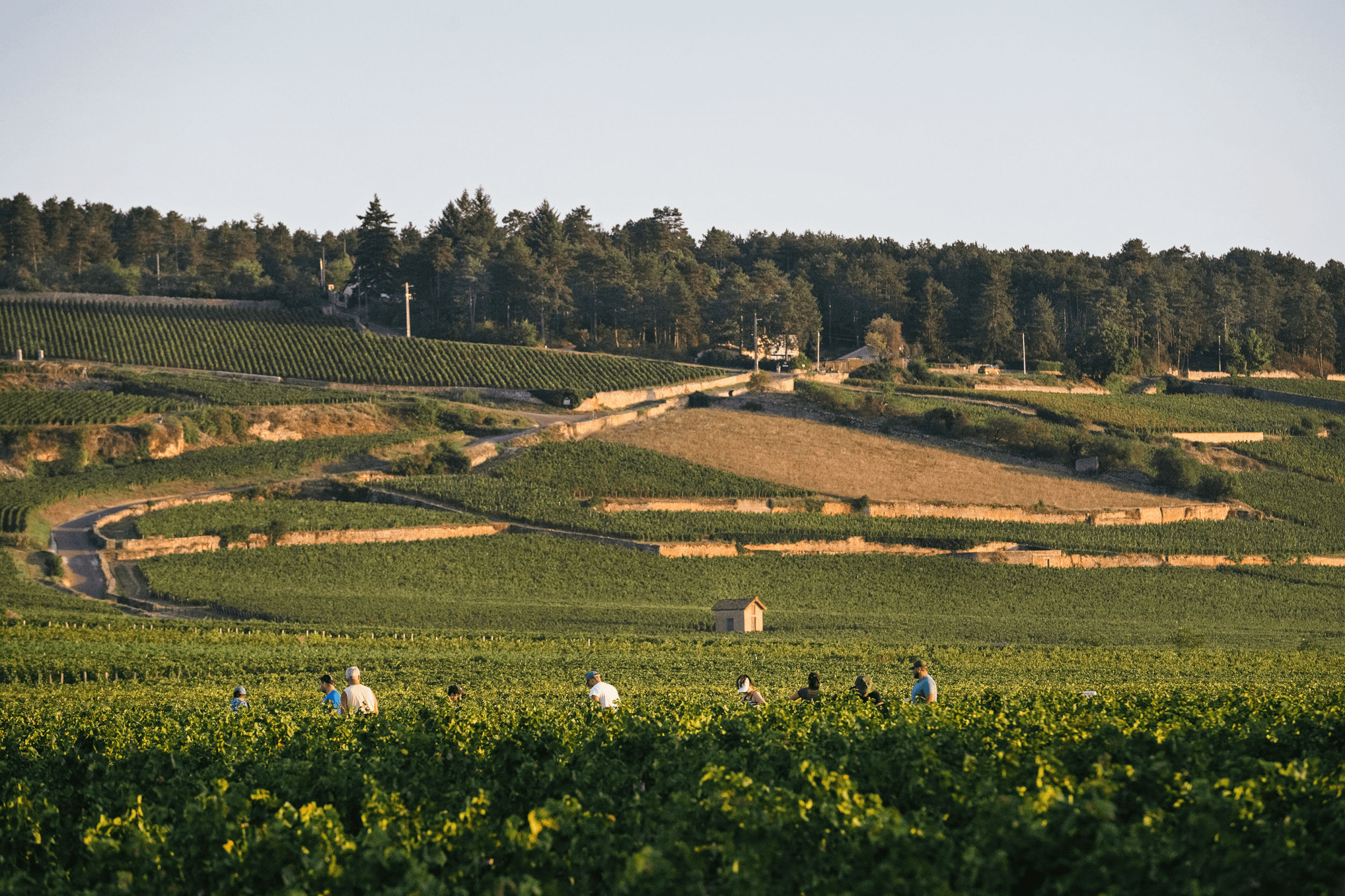
At the beginning of June, Domaine Chanson presented its 2022 vintage to the press, freshly bottled. The event also provided an opportunity to discuss the transformations underway at the Beaune-based Maison: the expansion of the estate with 45 hectares acquired in 2023 on the Côte Chalonnaise, conversion to organic farming, and new packaging.
At Chanson, this renewal is also being driven by Justine Savoye, Vineyard Manager, and Lucy Auger, Cellar Master, two women who, each in her own field, interpret the symphony of Burgundy’s Climats. For this new generation, the inscription of the Climats of Burgundy on the UNESCO World Heritage List is both a responsibility and a source of inspiration, an obligation that guides, but never confines.
Closer to the Terroirs
From its very origins, Chanson has been a true Maison beaunoise, as evidenced by its historic roots in the Bastion de l’Oratoire, nestled within Beaune’s ancient ramparts, and by its historic estate of 43 hectares of vineyards located on the Côte de Beaune, including several prestigious Premier and Grand Cru terroirs: Beaune, Chassagne-Montrachet, Corton, Puligny-Montrachet, Santenay, Savigny-lès-Beaune, and Pernand-Vergelesses.
In 2023, Domaine Chanson, owned by the Bollinger Group since 1999, expanded its vineyard holdings with the acquisition of Château d’Étroyes on the Côte Chalonnaise, whose vines are primarily situated on the renowned terroirs of Mercurey and Rully. Today, Chanson’s vineyard spans 88 hectares in total — two-thirds planted with Pinot Noir, and the remainder with Chardonnay.
It is in the vineyard that Burgundy’s defining pursuit — the pure expression of terroir — truly begins. Like many winegrowers in Burgundy, Chanson has long been committed to adopting practices that preserve its climats.
In 2015, the Domaine ceased using herbicides; in 2016, it obtained HVE certification (High Environmental Value). The 2024 vintage will mark the first organic-certified (AB) wines from the Côte de Beaune parcels, while the recently acquired Côte Chalonnaise vineyards are expected to achieve certification by 2028.
Looking ahead, Justine Savoye is anticipating the challenges of tomorrow. She oversees meticulous, parcel-specific work and is progressively renewing the vineyard plantings. The harvest start date, which unfolds over roughly fifteen days, is determined not only by the ripeness of each climat but also by the age of the vines — a testament to Chanson’s precision-driven approach.